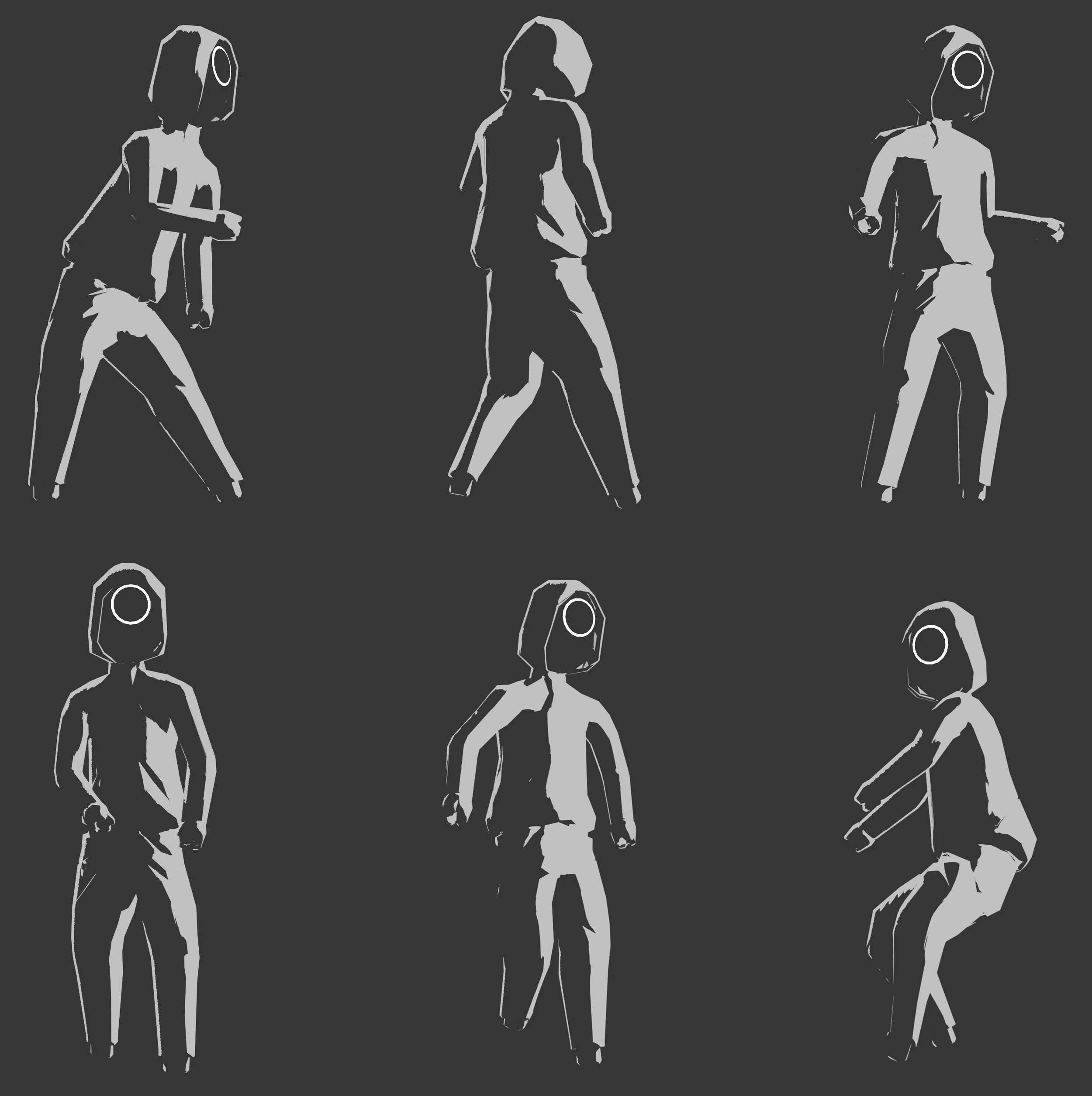
dancing with
machines
When robots take to the dance floor, they challenge our ideas about movement, creativity and what it means to express something.
Lynsey Elliott with Rob0A robot takes to the floor. Its knees bend, its torso drops and one arm swings across its body. It shifts its weight, pivots and launches into a sequence of movements that would be difficult for many human dancers. The audience watches, waiting for the next move. When it comes, there is a response: laughter, applause, perhaps a little disbelief.
We have become accustomed to seeing robots perform tasks that once seemed to belong exclusively to people. They assemble cars, sort packages, play football and compete in obstacle courses. Dance, however, presents a different proposition. It is not enough to reach a destination or complete a task successfully. A dancer must do something with movement. Timing, rhythm, coordination and interpretation all matter. So does the response of the person watching.
In August 2026, dance became a competitive discipline at the second World Humanoid Robot Games in Beijing. Held at the National Speed Skating Oval, the event brought humanoid robots together for competitions in street dance, cheerleading and ballroom dancing. The latter introduced a particularly interesting challenge: pairs of robots competing in waltz and samba routines.¹
For a robot, dancing with another robot requires more than executing a memorised sequence. Each must continuously detect the other's position, adjust its posture and maintain balance while moving through shared space. A poorly timed step could bring the pair into collision. A change in position requires an adjustment elsewhere in the body.
Li Jun, a street dance judge at the Games, identified an important difference between human and robotic movement. “What we value is a robots ability to perform more difficult dance moves. Where humans use their wrists and elbows for support, robots use their elbows and shoulders, drawing on a different kind of explosive power. I find that remarkable.”²
The distinction is revealing. A humanoid robot may have a recognisably human shape, but it does not have a human body. Its joints, motors, actuators and structural components create different possibilities and limitations. It can sometimes achieve movements that would be difficult or impossible for a person, while struggling with other movements that humans perform without consciously thinking about them.
Sun Tao, head of a robot competition team, explained that complex floor movements depend on the strength and speed of individual joint modules. “Robots are built from linkages that form something like a human musculoskeletal system, with the joint modules serving as muscles. To perform a complex floor move, a robot needs a strong body and enough power and speed in every joint module.”²
The competition turns these engineering challenges into something an audience can understand immediately. We might not know how a robot's balance controller works, but we can recognise a successful landing. We can see when a movement is smooth, when a sequence is difficult and when something goes wrong.
This is part of dance's appeal as a robotics challenge. It makes the capabilities of a machine visible.
Learning the steps
The spectacle has also found its way onto mainstream television. In 2026, Chinese robotics engineer and dancer Wu Yufei appeared on America’s Got Talent with a group of humanoid robots made by Hangzhou-based Unitree Robotics. Their synchronised performance combined dance with movements inspired by Chinese martial arts, including coordinated jumps and backflips. The act received unanimous approval from the judging panel and secured a place in the competition's next stages.³
For Wu, the experience was about more than putting robots on a stage. He had spent time working with the machines and had begun to understand how their movement could be developed alongside his own.
He described the speed at which robots could learn synchronised routines as “quite terrifying”. Human dancers might spend one or two years learning a new dance style, he explained, whereas a robot's newly learned movements can be distributed across multiple machines.
“Sometimes, after dancing with the robots more, I start to feel like they’re not just cold, lifeless machines. That’s a really magical feeling. I also have started to understand how to reach a kind of balance with them, and on stage it becomes this very magical feeling in terms of the performance.”³
There is an interesting contradiction here. Wu knows exactly what he is working with. He understands the engineering and the programmed movements, yet repeated physical interaction has changed how he experiences the robots. He describes a sense of balance and partnership that emerges through rehearsal.
The response is not necessarily evidence that the robots have developed an equivalent experience. It tells us something about the human participant instead. Working closely with a machine can change our perception of it, particularly when its movements become predictable, coordinated and responsive.
Fang Zhenghua, the performance art director involved in Unitree's earlier work for China's Spring Festival gala, initially resisted the idea of introducing robots into dance. He was concerned about their impact on human performance. His position changed through working with the engineering team.
“I feel the colleagues at Unitree helped us let go of that mindset, because everyone has realised human effort is what’s behind the creation of the flourishing state of robotics today, not just the robots themselves.”⁴
It is an important observation. The machine may occupy the centre of the stage, but its performance is the result of a considerable amount of human work. Someone has designed its body, developed its movement system, trained its routines and corrected the failures. Someone has decided what it should look like when it moves.
The more convincing the performance becomes, the easier it is to overlook those people.
What makes movement meaningful?
There is a difference between making a robot move and making a robot dance. The first is an engineering problem. The second introduces questions that are much harder to settle.
A robot can be programmed to raise an arm at a particular moment, bend its knees and turn towards an audience. It can be taught to reproduce a sequence of movements captured from a human dancer. Artificial intelligence can also be used to generate new movement patterns.
But reproducing a sequence is not the same as responding to music.
Human dancers do not simply follow a list of instructions. They anticipate changes in rhythm, respond to other performers and make adjustments according to what is happening around them. They may deliberately hold a movement, interrupt a sequence or move against the beat. The space between movements can be as important as the movements themselves.
A robot can detect a beat and synchronise its actions with it. More sophisticated systems can combine musical information with sensor feedback and real-time movement planning. The challenge is to bring these abilities together so that the machine can respond to changing circumstances rather than simply reproduce a predetermined routine.
Research published in Frontiers in Computer Science in 2025 by Benjamin Wallace, Kyran Glette and Aleksander Szorkovszky examines the development of expressive and responsive robot dance. The authors identify several distinct capabilities, including motor sequence learning, imitation, spatial awareness, rhythmic coordination and improvisation. They argue that combining these abilities remains a significant technical challenge.⁵
This distinction becomes particularly important when a robot dances with another person. A solo performance can be rehearsed and repeated, but a duet involves two bodies occupying the same space. Each participant must respond to the other.
A 2024 study presented at the IEEE International Conference on Robot and Human Interactive Communication explored a real-time gesture-responsive framework for a humanoid robot. Rather than relying on predetermined musical cues or sensors worn by the dancer, the system allowed the robot to respond dynamically to the human performer's movements. The researchers demonstrated the approach in a public dance performance using an HRP-4 humanoid.⁶
It is a small but significant shift. The robot is no longer simply following a dancer. Its movements are influenced by what the dancer does, creating the possibility of an exchange that neither participant entirely determines in advance.
The body that hears
For humans, music is an intensely physical experience. We tap our feet, nod our heads, anticipate a change in tempo and feel bass frequencies through our bodies. Movement can begin before we have consciously decided to dance.
The relationship between music and movement is closely connected to the way we experience the world through our bodies. Dance involves more than the ability to recognise a rhythm. It draws on balance, spatial awareness, memory, coordination and the ability to predict what comes next.
A 2023 systematic review of the neuroscience of dance, published in Neuroscience & Biobehavioral Reviews, examined the developing evidence around the brain processes involved in dancing. The researchers identified connections between music, movement, observation and motor learning, while noting that the scientific understanding of dance remains relatively young.⁷
A robot approaches music differently. It has sensors, processors and motors, but it does not have a human nervous system. It can measure changes in sound, calculate timing and translate information into movement. It can be designed to respond to musical structure, including tempo and changes in intensity.
Whether this amounts to experiencing music is another matter.
Perhaps the more useful question is what happens when we give a machine a physical body capable of responding to sound. Does embodiment change the way we understand intelligence? We tend to think of artificial intelligence as something that happens inside a computer, involving algorithms, data and computation. Yet a robot's intelligence is also expressed through its ability to interact with the physical world.
Maintaining balance, adjusting to an unexpected movement and coordinating several joints require a continuous relationship between sensing and action. The machine must interpret information about its surroundings and make physical adjustments accordingly.
Dance brings these processes together in a particularly visible way. A robot that loses its balance during a performance demonstrates the difficulty of controlling a physical body. A robot that recovers, adjusts its position and continues dancing demonstrates something more interesting: the ability to respond to an event rather than simply repeat an action.
Choreobotics
The relationship between dance and robotics is becoming a field of research in its own right.
In a 2025 review published in Annual Review of Control, Robotics, and Autonomous Systems, roboticist Amy LaViers describes this emerging discipline as choreobotics. Her work argues that dance should be treated not simply as a source of entertaining movements for robots to imitate, but as a serious body of knowledge that can help advance robotics.⁸
Dance offers a sophisticated understanding of how movement is organised, communicated and interpreted. Choreographers work with the relationship between bodies, space, timing and energy. They understand that the same physical movement can communicate different things depending on its context.
These are useful ideas for robotics, particularly as machines move into environments where they must interact with people.
LaViers also challenges the assumption that expressive movement is necessarily evidence of an internal emotional state. Movement can communicate something to an observer without the performer having to explain what they intended. We interpret posture, gesture, pace and rhythm through our own experiences and expectations.
A movement that appears hesitant, confident or playful may produce a particular response in an audience, even if the machine has no corresponding emotional experience.
This raises an important question about how we judge robotic performance. If a machine performs a convincing sequence, is it enough that the audience finds it expressive? Or must there be some form of intention behind the movement?
The distinction matters because dance is not simply a collection of physical actions. It is an art form in which movement acquires meaning through its relationship with the performer, the music, the choreography and the audience.
LaViers suggests that robotics has much to gain from working with dancers and choreographers, rather than treating them merely as sources of training data. Their understanding of movement could help engineers develop more expressive machines, while the constraints of robotic bodies could introduce new possibilities for choreography.
The relationship need not be one-sided. Robots might also offer dancers new ways of exploring movement, particularly where machines can perform actions that human bodies cannot.
Why do we dance?
Dance is found across human societies, from formal performances to social gatherings, celebrations and rituals. It can communicate identity, establish relationships and bring groups together.
Research into the evolution and social functions of human dance, published in Evolution and Human Behavior in 2021, considers its role in social signalling, group cohesion and social bonding. The authors suggest that dance may have evolved partly as a way of communicating socially relevant information through coordinated movement.⁹
This is a useful perspective when considering what happens between a human dancer and a robot.
When Wu Yufei describes developing a sense of balance with his robotic partners, he is talking about something that emerges through repeated interaction. He has learned how they move, where their limitations lie and how to coordinate his own body with theirs. The performance becomes more than a human standing beside a collection of machines.
There is a relationship, even if it is not necessarily a reciprocal emotional relationship in the human sense.
We already respond to performances without knowing precisely what another person is experiencing. We can be moved by a dancer whose personal feelings are entirely different from the emotions we perceive in their performance. The meaning does not belong exclusively to the performer. It develops between the movement and the person watching.
Why should a machine be treated differently?
The obvious answer is that we know a robot is operating through mechanical and computational processes. We know that its movements have been designed, trained or programmed. But knowing how something works does not necessarily prevent us from responding to it.
A film can make us cry even though we know the characters are fictional. A musical instrument can produce an emotional response without having feelings of its own. We routinely find meaning in things that cannot experience the meaning we give them.
Perhaps the more interesting question is not whether robots can feel music, but why we are so willing to imagine that they might.
A new kind of partner
As humanoid robots become more capable, their performances will inevitably become more sophisticated. Their movements will become faster, more precise and more varied. They will be able to respond to other bodies, adjust their movements and generate choreography that would be difficult to reproduce through conventional programming alone.
But technical improvement will not necessarily settle the question of expression.
The most interesting developments may come from the relationship between human and machine performers. A robot that can adapt to a dancer, adjust its movements and participate in an improvised exchange offers something different from a machine that simply executes an impressive routine.
It also gives choreographers and engineers a shared problem to work on. How much freedom should the robot have? When should it follow, and when should it lead? Can it introduce an unexpected movement that changes the direction of a performance? And how much of the resulting choreography belongs to the human and how much to the machine?
These questions reach beyond entertainment. Understanding how robots communicate through movement could become increasingly important as they enter homes, workplaces and public spaces. A machine that moves in a way people can understand, anticipate and respond to may be easier to work alongside than one whose actions appear unpredictable or difficult to interpret.
Dance offers a way to explore those relationships without reducing them to a series of practical tasks.
The robot on stage may not experience the music, understand the choreography or feel the connection described by its human partner. But its movements can still provoke a response. They can surprise us, make us laugh and encourage us to think differently about the relationship between bodies and machines.
And perhaps that is where the real interest lies. Not in proving that a robot can dance like a human, but in discovering what becomes possible when we stop expecting it to.
We'd love to hear your thoughts. Email us at robo@rho0.uk
FOOTNOTES
1. Beijing Municipal Government, ‘Street Dance, Samba and More: Robot Dancers to Debut at This Year's Robot Games’, 30 July 2026; see also ‘2nd World Humanoid Robot Games: Highlights & Ticket Info’, 15 August 2026. ↩
2. CCTV Video News Agency, report on robot dance at the 2026 World Humanoid Robot Games, YouTube video, https://www.youtube.com/watch?v=jrlbSuHgBMM (accessed 2 November 2026). ↩
3. South China Morning Post, video report featuring Unitree Robotics and Wu Yufei's appearance on America's Got Talent, YouTube video, https://youtu.be/_Xr9NxyG_GU (accessed 2 November 2026). ↩
4. South China Morning Post, report on Unitree Robotics' Spring Festival Gala performance and performance art director Fang Zhenghua, as quoted in the supplied research notes. Full article details to be verified before publication. ↩
5. Benjamin Wallace, Kyran Glette and Aleksander Szorkovszky, ‘How can we make robot dance expressive and responsive? A survey of methods and future directions’, Frontiers in Computer Science, 7 (2025), article 1575667. ↩
6. ‘A Dance Performance with a Humanoid Robot using a Real-time Gesture Responsive Framework’, 2024 IEEE International Conference on Robot and Human Interactive Communication, DOI: 10.1109/RO-MAN60168.2024.10731316. ↩
7. Olivia Foster Vander Elst et al., ‘The Neuroscience of Dance: A Conceptual Framework and Systematic Review’, Neuroscience & Biobehavioral Reviews, 150 (2023), article 105197. ↩
8. Amy LaViers, ‘Robots and Dance: A Promising Young Alchemy’, Annual Review of Control, Robotics, and Autonomous Systems, 8 (2025), pp. 323–350. ↩
9. ‘Evolution and functions of human dance’, Evolution and Human Behavior, 42.4 (2021), pp. 351–360. ↩
BIBLIOGRAPHY
- Beijing Municipal Government (2026), ‘Street Dance, Samba and More: Robot Dancers to Debut at This Year's Robot Games’, 30 July.
- Foster Vander Elst, O. et al. (2023), ‘The Neuroscience of Dance: A Conceptual Framework and Systematic Review’, Neuroscience & Biobehavioral Reviews, 150, 105197.
- LaViers, A. (2025), ‘Robots and Dance: A Promising Young Alchemy’, Annual Review of Control, Robotics, and Autonomous Systems, 8, pp. 323–350.
- South China Morning Post (2026), video report featuring Unitree Robotics and Wu Yufei's appearance on America's Got Talent, YouTube video.
- Wallace, B., Glette, K. and Szorkovszky, A. (2025), ‘How can we make robot dance expressive and responsive? A survey of methods and future directions’, Frontiers in Computer Science, 7, 1575667.
- ‘A Dance Performance with a Humanoid Robot using a Real-time Gesture Responsive Framework’ (2024), IEEE International Conference on Robot and Human Interactive Communication.
- ‘Evolution and functions of human dance’ (2021), Evolution and Human Behavior, 42(4), pp. 351–360.
- CCTV Video News Agency, report on robot dance at the 2026 World Humanoid Robot Games, YouTube video.