15 November 2026
Richmond, London
The making
of Robo
How two people with different starting points and a shared curiosity came together to create an independent journal exploring how robotics is changing our world.
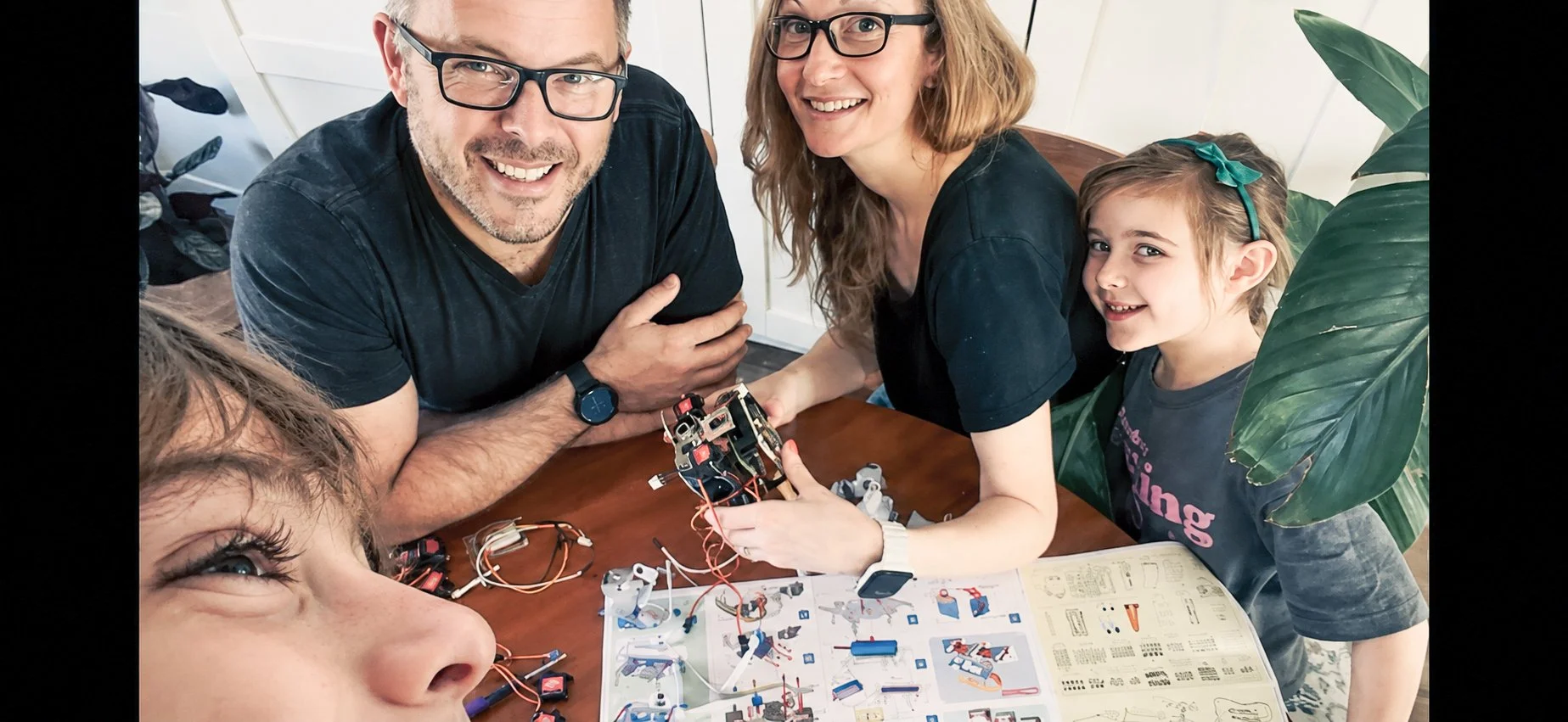
Friends and co-founders Tom and Lynsey share their enthusiasm for robotics with Lynsey’s children, Jacob and Emma.
In April 2026, friends Tom Weller and Lynsey Elliott began discussing robotics. They discovered that they brought different professional experiences and perspectives to the subject, alongside a shared curiosity about its wider significance. Recognising the potential of what they could create together, they’re now building an independent cultural platform to explore the people, ideas and technologies shaping our relationship with intelligent machines.
At its heart is ROBO, a beautifully crafted print journal bringing together engineering, history, art, design, sport, philosophy and popular culture through stories that cross disciplines and challenge conventional thinking. Its publishing programme will include quarterly editions, an annual and a limited art edition. Bespoke special editions will also be available to organisations shaping the field of robotics.
Still in its early stages, ROBO is being developed independently, with Tom and Lynsey self-funding the project while building relationships with potential partners, sponsors and investors.
Tom has been fascinated by robots since his parents bought him a Tomy Verbot in the early 1980s. Inspired by the Star Wars Jawas and their Sandcrawler filled with robots, he built his first robot at the age of 13, with his beloved copy of the RS Components catalogue.
Lynsey is a creative leader with more than 20 years of experience in editorial design, shaping visual storytelling across motoring and motorsport journalism. Her work has brought her into contact with some of the most technically complex and competitive engineering environments. She is currently building her first robot, bringing a beginner’s curiosity to a rapidly evolving field.
Tom: ROBOSPORT.
Lynsey: Optimus robots racing? You know, that thing can run almost 13k, which is twice as fast as us.
Tom: I was thinking about robots and listening to a podcast about NYT, and suddenly it made me think of Autosport. Then I thought, what if we started a magazine called Robosport? So the new goal for our weekly run is to beat Optimus over 10k?! That is a great goal!
Lynsey: Yes! I’m also thinking Waymo v Tesla. And marathon pitstops: I’m fascinated by the moment just before the robots start running again.
Tom: When it steps back slightly to push off?
Lynsey: Yes. It’s like a moment of thinking, even though it isn’t. I’m obviously one to anthropomorphise. I feel empathy for them.
Tom: I wonder if it’s similar to when a human sprinter does it. Sort of priming for the first step because somehow the little extra rock gets the motion going.
Lynsey: I’ve also noticed during robot fighting, when they’re hit in the ring, the swaying makes them seem vulnerable, but then there’s something about the way they stand back up at the end, when they take back their nonhumanness.
Tom: Yes. Extreme vulnerability and a sense of shock and confusion that feels really human. And then limbs that reset themselves…
Where a love of art and technology began
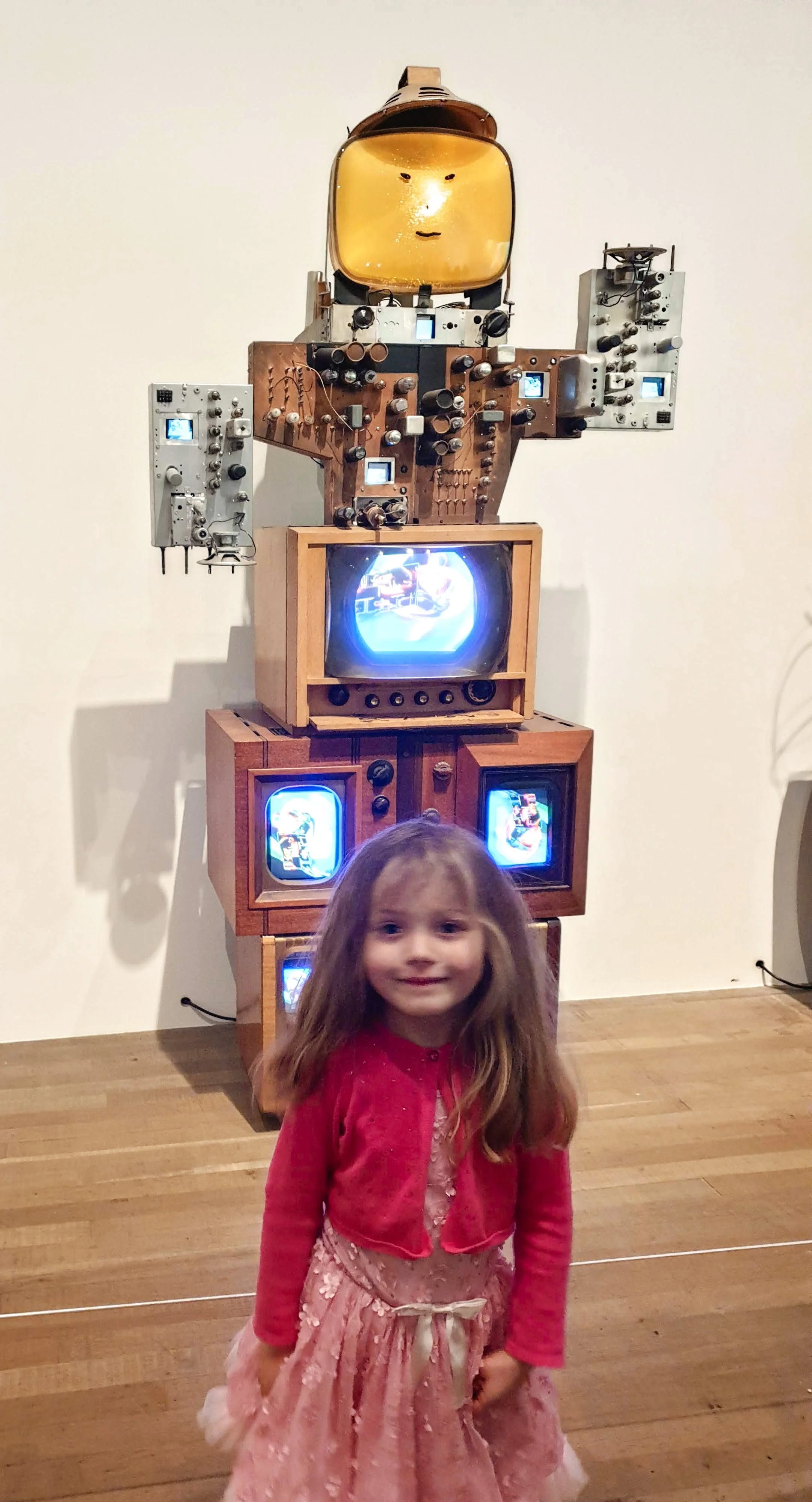
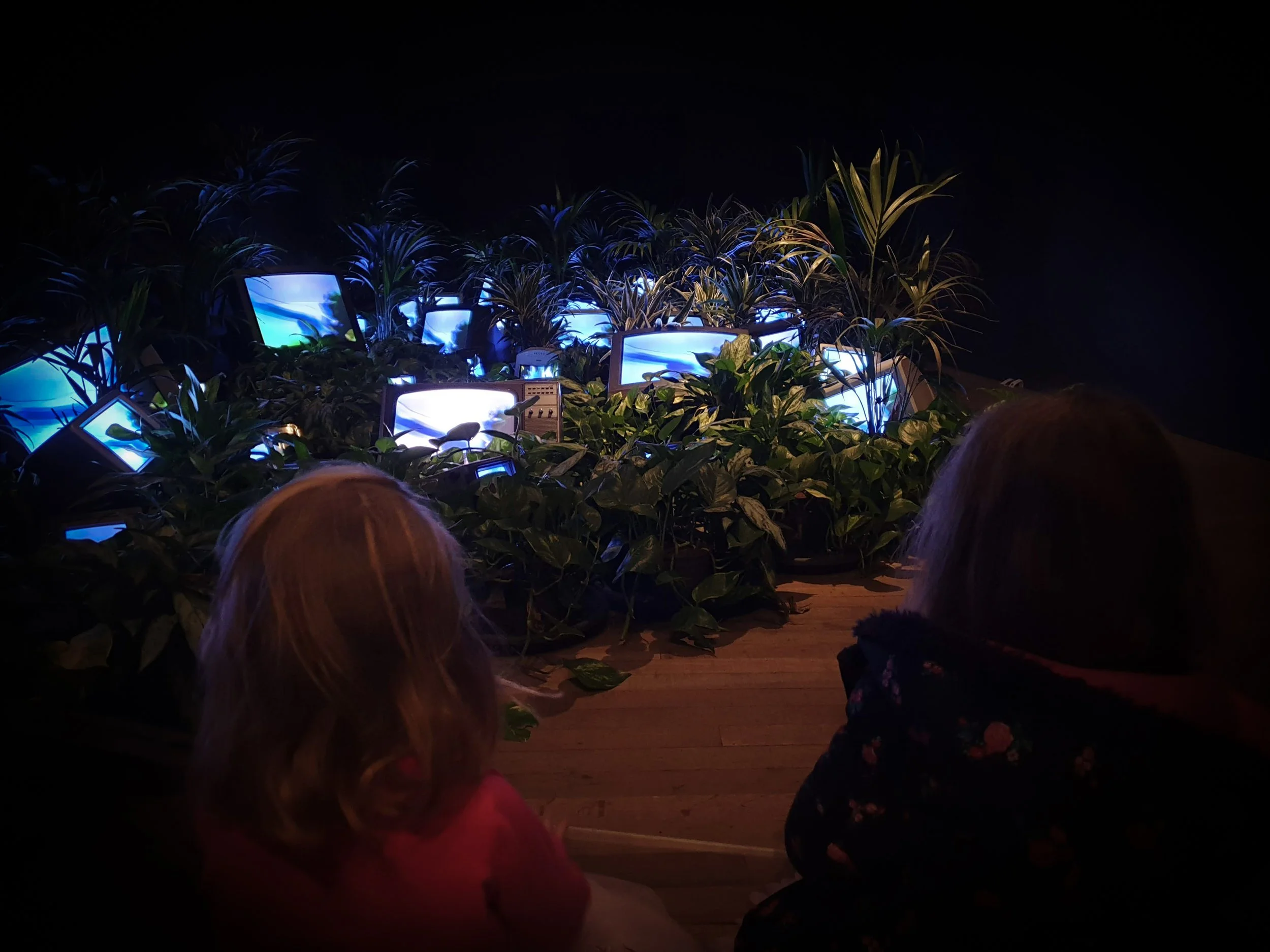
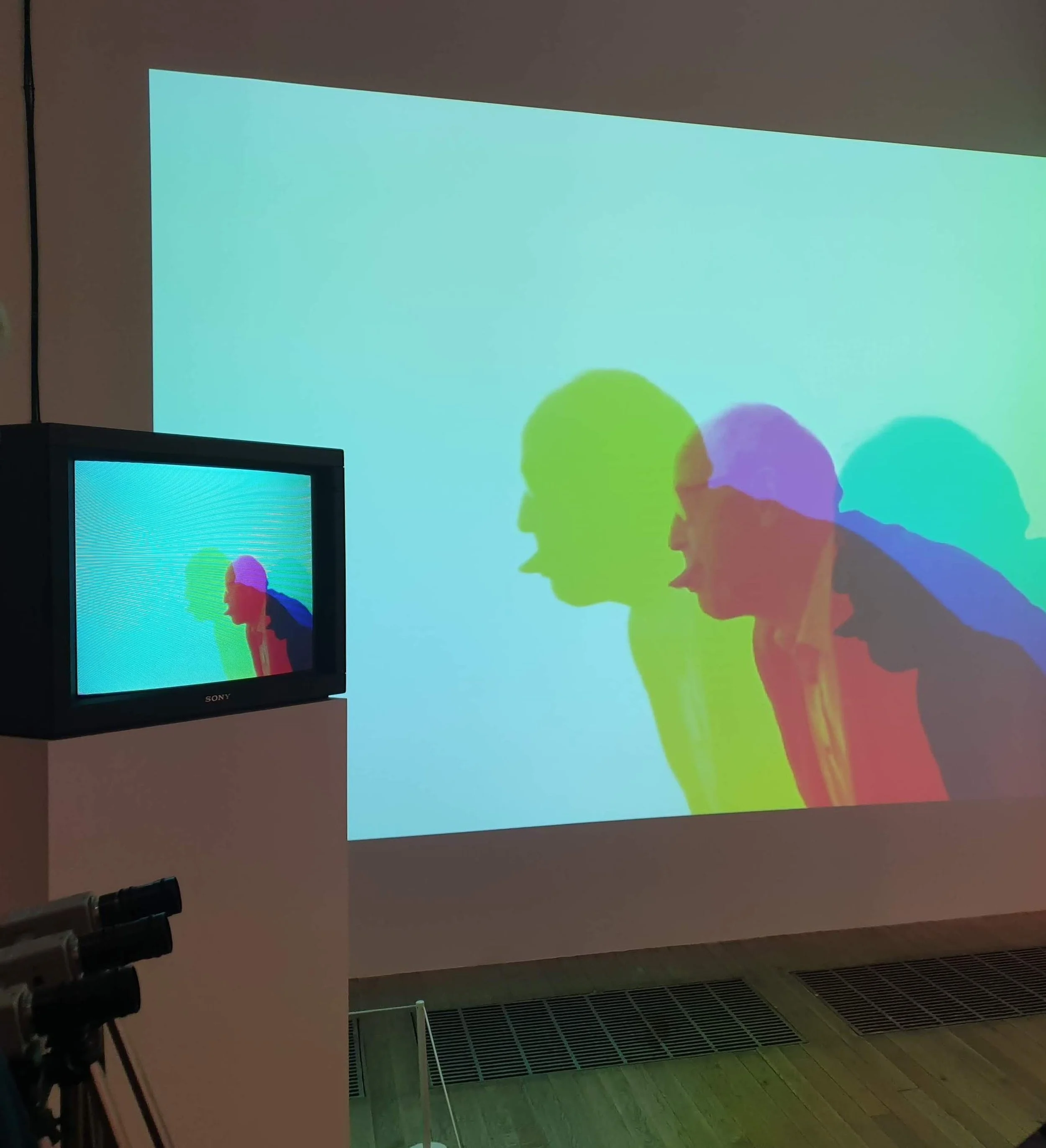
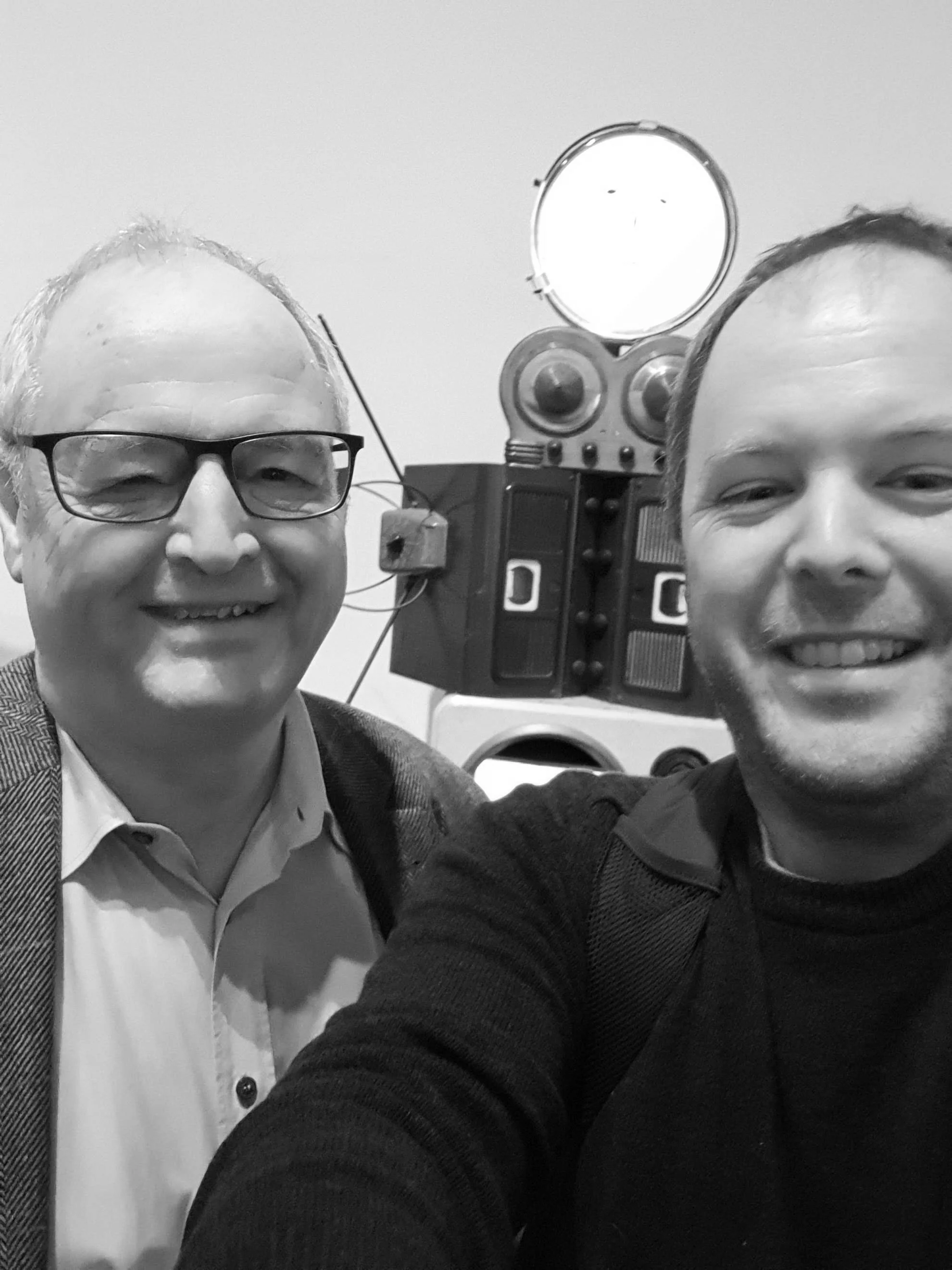
The art was not the hardware. It was the spontaneous, bewildered reactions of the pedestrians on the street. Decades before modern algorithmic feeds began trapping us in frictionless isolated echo chambers, Paik anticipated the danger of a sterile network. Paik engineered messy, real-time collisions, when robot K-456 took the Canal Street Stroll he wanted it to “meet people in the street and give one second of surprise”. When my beloved godfather and I took my daughters to the Nam June Paik exhibition at Tate Modern, it became one of my favourite days.
My godfather died last year, leaving me with a love of art not just as a cultural artefact, but as an active practice and the drive to collect it. Amidst those glowing screens, our shared passion for art, technology and non-conformism met in a joyful melee where he, my young twins and I revelled. Following his example, and tracing Paik’s footsteps down Canal Street, ROBO will not follow the conventions of a typical magazine. We are curating a gallery that places startups and artworks side by side, because we know the true art lives in the interstitial, in the messy human reaction just as much as the hardware.